Why Golfers Should Stop Practicing at the Range (Until They Learn This)
“Practice doesn’t make perfect. Practice makes permanent. Only perfect practice makes perfect.”
— Vince Lombardi
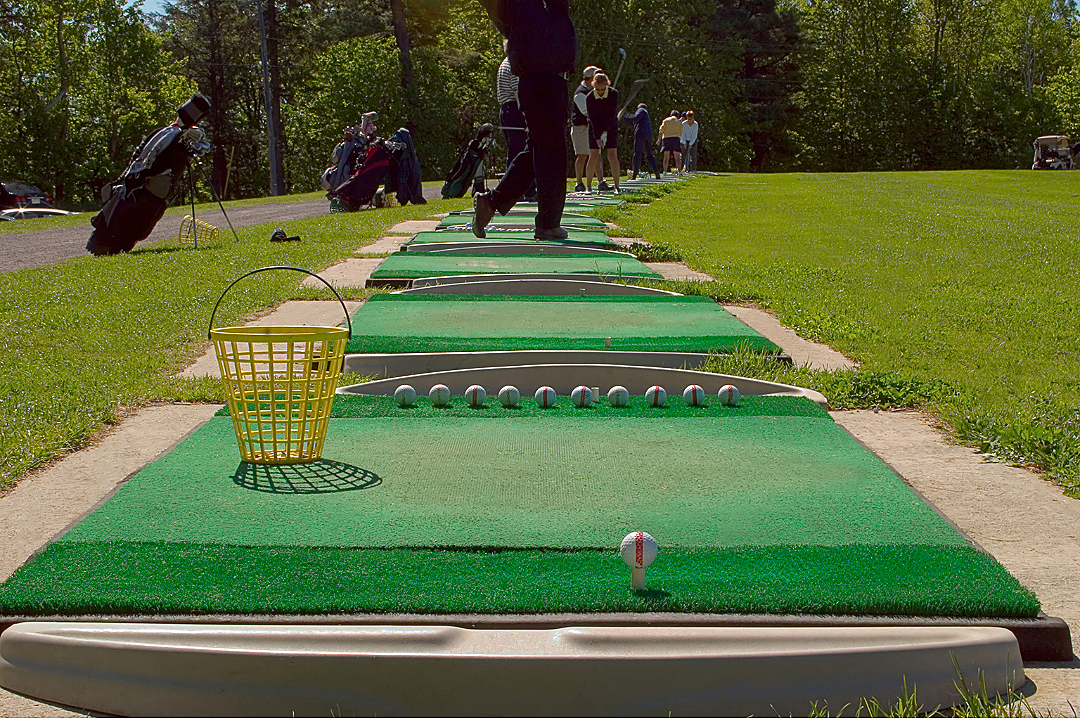
The driving range might be the worst place to get better at golf. There. I said it.
It’s not because hitting balls is bad. It’s because most golfers don’t know what they’re actually practicing — or what they should be. And so, the range becomes a graveyard of false starts, overthinking, and bandaids. Golfers leave frustrated, stuck, and even more confused than when they started.
If that’s been you? You’re not alone. But it doesn’t have to be that way.
The Range Rewards Repetition, Not Retention
Most golfers head to the range thinking they need to “groove” their swing. They hit a bucket of 7-irons until something feels right, then rinse and repeat — until the next day, when they can’t recreate it.
That’s not learning. That’s temporary compensation.
If you don’t understand why a ball starts right or left…
If you don’t know your low point, your face-to-path, or your horizontal contact…
If you can’t predict your miss before it happens…
Then your practice is blind.
Practice Isn’t About Getting It Right — It’s About Understanding It
Here’s what most people (and sadly, most coaches) get wrong:
You don’t practice to hit it perfect.
You practice to build an understanding of what creates good outcomes — and what causes bad ones.
That’s why we don’t just hand out swing tips.
That’s why we talk about concept reps, identity over outcome, and skill building, not quick fixes.
Learning how to improve means:
Knowing how to test your ideas
Understanding what feedback matters
Using drills that are matched to your actual swing concepts
Training patterns — not just positions
If You Don’t Have a Framework, the Range Will Trick You
The range rewards the illusion of progress. You hit a few straight ones and assume things are “clicking.” But without pressure, variability, and context, nothing sticks.
This is why we teach our players to:
Track concepts like low point control, face angle, and strike location
Build reps based on movement — not outcome
Use simulators or structured environments to get accurate feedback
And if you’re not doing that yet? You don’t need the range. You need a reset.
Don’t Just Practice. Train.
At Optimum Golf, we’re not trying to fix your swing in a single lesson. We’re trying to build your entire game from the ground up — with the tools, concepts, and identity you need to own it for the long haul.
Whether you’re hitting it great or struggling off the tee…
Whether you’ve got a tournament next week or just want to stop topping your 3-wood…
You don’t come to us because you’re broken.
You come to us because you want to get better — on purpose.
The range isn’t bad. But until you’ve got a system that makes practice productive, it’s not helping.
Want to Start Training with Purpose?
DM us, book a session, or just ask us what concept is holding you back right now.
We’ll help you build a swing you can trust — not one that disappears after a good warmup.