Stop Rushing Your Practice: Your Swing Can’t Show Up if You Don’t
Most golfers walk into the bay carrying the momentum of the rest of their day – rushing, thinking about the next obligation or simply trying to squeeze practice into a tight schedule. In that state, the instinct is to grab a club and start hitting balls immediately, almost as if speed alone could unlock the swing you’re hoping to find. But tight muscles, rushed breathing and a restricted turn set the stage for frustration before the first shot is even struck. Nothing feels right, and it’s easy to mistake that tension for a lack of ability rather than a lack of readiness.
I had that exact moment myself this morning. With fifteen minutes to practice, I set up to a ball and instantly felt the kind of tightness that tells you the swing isn’t available yet. It wasn’t mechanical. It wasn’t a lapse in understanding. It was simply the realization that I was trying to force a fluid, rotational movement out of a body that hadn’t been given even a moment to loosen. Most golfers push through that feeling; they assume the swing will appear if they hit enough balls. But when you’re tight, your compensations take over long before good movement can show up.
You’ll often see it in patterns like:
A collapsing lead leg
Lateral sway instead of rotation
Early breakdown in sequencing
A growing sense that every shot is confirming something “wrong”
Those aren’t signs of a broken swing – they’re signs of a body that isn’t ready to move the way your swing requires.
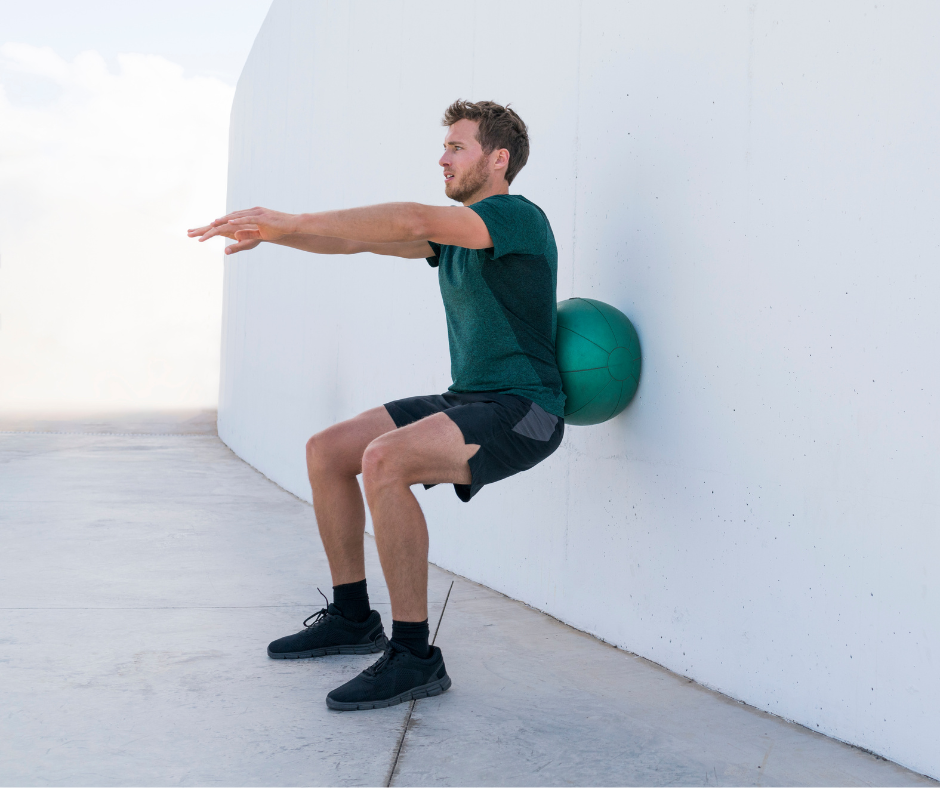
This is where most players would benefit from shifting the first minute of their practice away from the golf club entirely. Instead of trying to hit your way into looseness, you can create it more effectively by starting with something heavy – a medicine ball, a slam ball or anything with enough weight to reveal how your body is actually moving.
A heavy object forces engagement not because you’re thinking about mechanics but because the weight demands it. Two things happen immediately:
Your core activates without conscious effort
Inefficient patterns become obvious – if you’re swaying, collapsing or relying on the wrong muscles, the ball magnifies it instantly
Most golfers don’t realize their left leg breaks down because the movement is drifting laterally. With a medicine ball, you can’t hide that. The rotation has to come from your core – and when it does, the motion becomes circular again instead of collapsing inward. The moment you feel that connected turn, something loosens. Not because you forced it but because your body finally had the space to settle into the movement your swing depends on.
That small shift – taking sixty seconds to let your body wake up – changes everything. The mechanics you’ve been working on come back online. Your swing feels familiar again. The tension releases and confidence returns because you’re finally practicing from a state that supports good movement.
So the next time you walk into practice feeling rushed or tight, don’t ignore it. It’s not a sign to push harder – it’s a sign to pause. Give your body the chance to arrive, then ask it to perform. When you start your session from readiness instead of urgency, your swing has the freedom to show up the way you know it can.
If you’re ready to understand your swing through better movement, clearer intention and a coach who’s here to guide the process, schedule a lesson and let’s get started.